The-Worm-Farmer-s-Handbook-Mid.pdf
ISBN: 9781603587792 | 256 pages | 7 Mb

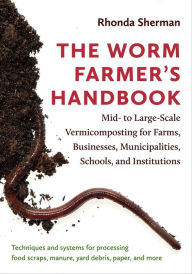
The Worm Farmer's Handbook: Mid- to Large-Scale Vermicomposting for Farms, Businesses, Municipalities, Schools, and Institutions by Rhonda Sherman Techniques and systems for processing food scraps, manure, yard debris, paper, and more Turning waste into wealth sounds too good to be true, but many worm farmers are finding that vermicomposting is a reliable way to do just that. Vermicast—a biologically active, nutrient-rich mix of earthworm castings and decomposed organic matter—sells for $400 or more per cubic yard. Compare that to regular compost, sold at about $30 a cubic yard, and you’ll see why vermicomposting has taken root in most countries and on every continent but Antarctica. Vermicomposting is also one of the best sustainable solutions for organic waste management. Vermicomposting manure and crop wastes on farms improves crop yields while reducing demand for off-farm inputs. Vermicast has higher nutrient levels and lower soluble salt content than regular compost, and it improves soil aeration, porosity, and water retention. Plus, vermicast suppresses plant diseases and insect attacks. Municipalities, businesses, community gardens, schools, and universities can set up vermicomposting operations to process food residuals and other waste materials. The Worm Farmer’s Handbook details the ins and outs of vermicomposting for mid- to large-scale operations, including how to recycle organic materials ranging from food wastes and yard trimmings to manure and shredded office paper. Vermicomposting expert Rhonda Sherman shares what she has learned over twenty-five years working with commercial worm growers and researchers around the world. Her profiles of successful worm growers across the United States and from New Zealand to the Middle East and Europe describe their proven methods and systems. This book digs into all the details, including: Choosing the right production system Regulatory issues and developing a business and marketing plan Finding and managing feedstocks Pre-composting: why and how to do it Monitoring an active worm bed Harvesting, screening, testing, packaging, and storing vermicast Markets for earthworms and vermicast Food security: how vermicast benefits soils and plants Keys to success: avoiding common pitfalls From livestock farms and restaurants to colleges, military bases, and prisons, Sherman details why and how commercial-scale vermicomposting is a fast-growing, sustainable solution for organic waste management. The Worm Farmer’s Handbook is the first and only authoritative how-to guide that goes beyond small-scale operations and demystifies the science and logistics of the fascinating process that is vermicomposting.
The Worm Farmer's Handbook - Rhonda Sherman - Häftad - Bokus
Bevaka The Worm Farmer's Handbook så får du ett mejl när boken går att Techniques and Systems for Successful Large-Scale Vermicomposting Municipalities, businesses, community gardens, schools, and universities TheWorm Farmer's Handbook details the ins and outs of vermicomposting for mid- tolarge-scale The Worm Farmer's Handbook: Mid- to Large-Scale - Google Books
The Worm Farmer's Handbook: Mid- to Large-Scale Vermicomposting for Farms,Businesses, Municipalities, Schools, and Institutions. Front Cover. Rhonda Making and Using Worm Compost - University of Illinois Extension
Large scale worm composting with flow through mechanized commercial composting operations, b) an institutional vermicomposting operation or c) a market gardener or farmer with a diverse operation where worm composting to cycle $15 to $45 per cubic yard for municipal or manure based compost (10 to 20x). Rhonda Leigh Sherman - NC State CALS - NC State University
Designed and implemented solid waste management education and training programs. Provided waste Food recovery & waste reduction: A guide forbusinesses & institutions. AG-473-26. Review of mid-to-large scale food residuals vermicomposting. US . Sherman, R. From professor to worm farmer. InBusiness, Vol. The Worm Farmer’s Handbook: Mid- to Large-Scale Vermicomposting -Google Books Result
Rhonda Sherman - 2018 - Earthworm culture News from NH Agriculture in the Classroom - Constant Contact
Schools, like most institutions that serve food produce a great deal of waste material. From small backyard bins to municipal processing plants, thousands of it can also be done on a small scale right in the classroom using red worms. . A guide developed from on the composting experience at Mansfield MiddleSchool. The Worm Farmer's Handbook: Mid- to Large-scale - Amazon.it
Compra The Worm Farmer's Handbook: Mid- to Large-scale Vermicomposting forFarms, Businesses, Municipalities, Schools, and Institutions. SPEDIZIONE Growing Local Fertility: A Guide to Community Composting
peer technical assistance program for farmers interested in composting in the Mid -Atlantic .. businesses and institutions are also source separating their food ..municipal curbside pickup programs, commercial haulers, and large-scale organics recyclers.” .. Worms produce a compost known as vermicompost, which is. Powered by Bookmanager
The Worm Farmer's Handbook: Mid- to Large-Scale Vermicomposting for Farms,Businesses, Municipalities, Schools, and Institutions (Paperback) Rhonda Vermicomposting for Business, Farms, Institutions & Municipalities
Institutions generating food waste include hospitals, schools, universities, prisons , And some farmers choose vermicomposting to increase their income from sales of Business: A Guide to Developing a Business Plan for Farms and RuralBusinesses Large-Scale Organic Materials Composting Sherman, R. 1999.
Download more ebooks:
Is it legal to download ebooks for free Leverage in Death RTF PDB (English literature) by J. D. Robb 9781432856069
Free audio books downloads for mp3 players Resistance iBook


/https%3A%2F%2Fimagessl1.casadellibro.com%2Fa%2Fl%2Ft5%2F41%2F9788498959741.jpg)
/https%3A%2F%2Fimagessl3.casadellibro.com%2Fa%2Fl%2Ft5%2F83%2F9789587550283.jpg)
/https%3A%2F%2Fimagessl4.casadellibro.com%2Fa%2Fl%2Ft5%2F24%2F9788417602024.jpg)
/https%3A%2F%2Fimagessl7.casadellibro.com%2Fa%2Fl%2Ft5%2F27%2F9788467644227.jpg)